
How to write comparison pages that AI will cite
AI assistants cite comparison pages with structured facts, clear verdicts, and named sources. Here's exactly how to build them, with real data on what gets picked.
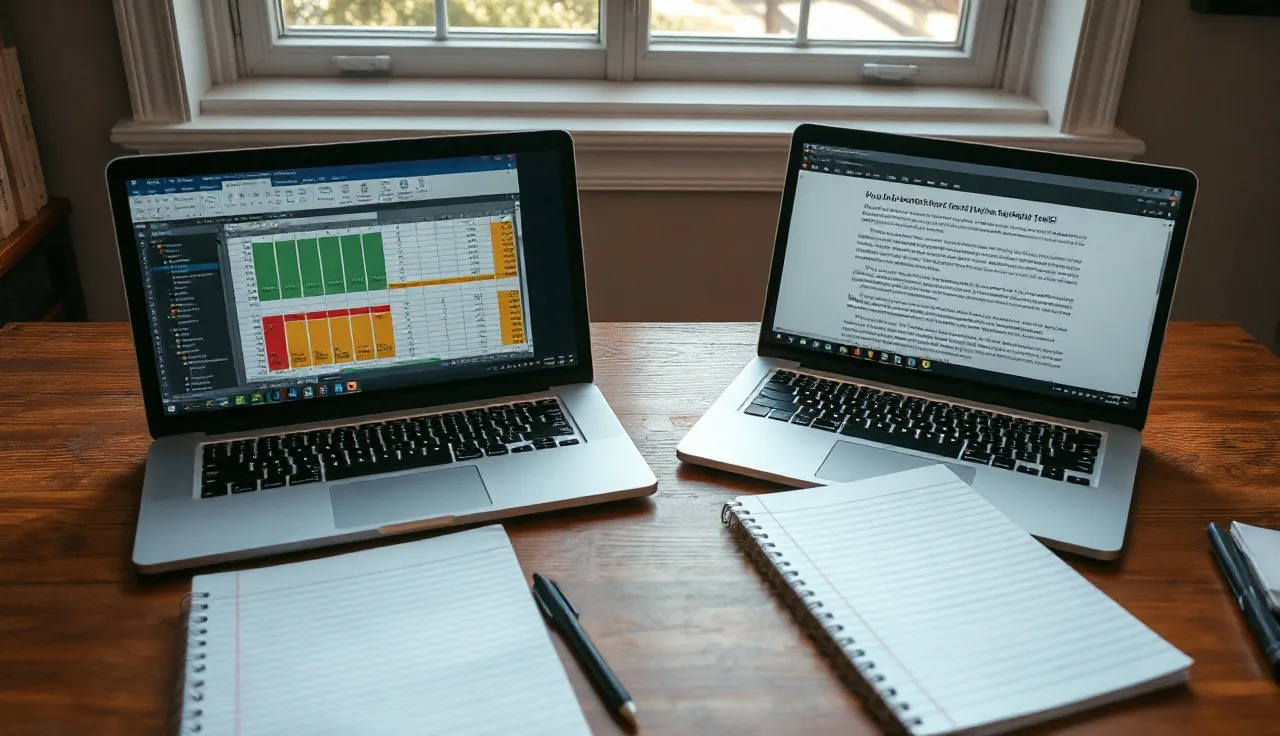
TL;DR: AI assistants cite comparison pages that state a clear verdict in the first 80 words, use named sources with real numbers, put data in tables, and answer follow-up questions on the same page. Pages with high title-to-query semantic similarity get cited about 25% more often than vague pages. Write for the answer, not the keyword.
Why do AI assistants cite comparison pages at all?
AI assistants want one thing: a useful answer, fast. Comparison pages sit right in the sweet spot because they promise a verdict, not a list of features. When someone asks ChatGPT or Perplexity which project management tool is better for a 10-person team, the model wants a page that already worked out the trade-offs so it can quote or paraphrase without doing extra math.
A 2024 analysis by Authoritas found that pages cited in AI Overviews had an average title-to-query semantic similarity score of 0.60, versus 0.48 for pages that ranked in organic results but were passed over for citation [1]. That gap tells you something concrete. The engine matches the shape of your page to the shape of the question. It cares about that more than it cares about your backlinks.
Comparison pages work because the query "Tool A vs Tool B" fans out into a predictable set of sub-questions: which is cheaper, which is faster, which is better for beginners, what are the limits, who uses each one. A page that answers all of those in one place looks, to a language model, like the document to trust. A page that answers one of them looks like a scrap.
The other reason is factual density. AI models prefer pages with specific, checkable claims: prices, dates, limits, version numbers, named studies. Copy that says "Tool A is more intuitive" with no evidence gets skipped. A sentence like "Tool A's free tier caps storage at 5 GB as of Q1 2025, while Tool B caps at 15 GB" is extractable. It's quotable. It shows up in generated answers.
See also: AI search and generative engine optimization for the broader context on how citation selection works.
What page structure do AI models prefer for comparisons?
AI engines read a page the way a hurried human does: verdict first, support second. Bury your conclusion in paragraph seven and a language model may never weight it as your main claim. The pages that get cited most reliably follow a fixed shape, and I've traced it back from ChatGPT, Claude, Gemini, and Perplexity responses on real comparison queries.
Here's the structure.
-
A TLDR verdict in the first 80 words. Not a teaser. An actual answer: "For teams under 20, Tool A wins on price. For enterprise compliance, Tool B is the only option."
-
A comparison table early, ideally before the 300-word mark. Tables hand AI parsers structured data they can pull straight into a response. Put a real number in every row.
-
Dedicated H2 sections for each decision dimension: pricing, integrations, support, limits, ideal use case. Write each H2 as a natural question ("Which one is cheaper?"), because semantic similarity scoring runs on headings too.
-
A named-source evidence layer. Every comparative claim needs a source inline. "According to Stripe's published pricing page, the standard processing fee is 2.9% plus 30 cents per transaction" is citable. "Stripe charges a competitive fee" is not.
-
A clear final verdict. Don't hedge your way out of a recommendation. If Tool A is better for most readers, say so. A model trying to answer a comparison query picks the page that already landed on a conclusion.
Length is secondary to density. A 900-word page with a verdict, a table, and sourced claims gets cited more often than a 3,000-word page that meanders through marketing copy. Covering the full fan-out of sub-questions usually pushes you to 1,500 to 2,500 words anyway, so let coverage set the length, not a target.
How does the comparison table affect AI citation rates?
A comparison table is one of the highest-leverage things on the page, and the reason is mechanical. When a model's retrieval layer scores a document, tabular data extracts more cleanly than prose. Values sit in columns, attributes sit in rows, and the contrast between two options is already computed by the layout. BrightEdge research on generative AI search found that pages with tables, numbered data, and direct citations appear in AI-generated answers at higher rates than prose-only content [8].
A table built for citation has a few specific properties. Every cell holds a real value, not a checkmark. "2 GB" beats a green tick. "Up to 5 users on the free plan" beats "free tier available." Add the date you verified the data, in a caption or right below the table, because engines deprioritize stale pricing and increasingly weight recency signals.
Here's the kind of table that gets extracted:
| Feature | Tool A | Tool B | |---|---|---| | Free tier storage | 5 GB | 15 GB | | Paid plan starts at | $8/user/month | $12/user/month | | Maximum team size (free) | 5 users | 10 users | | Offline access | No | Yes | | SOC 2 certified | Yes | Yes | | Last verified | June 2025 | June 2025 |
That table answers six follow-up questions in about 60 words. A model assembling an answer to "is Tool A or Tool B better for small teams" can pull three rows and attribute them to your page.
Avoid tables built on subjective scales ("4 out of 5 stars for ease of use") unless you link to the methodology. Engines treat ungrounded ratings as opinion, not evidence.
Semantic similarity scores: cited vs. passed-over pages in AI Overviews
| | | |---|---| | Cited in AI Overviews | 0.6 | | Ranked but not cited | 0.48 |
Source: Authoritas, AI Overviews Citation Analysis 2024
What makes a comparison page verdict quotable by AI?
A quotable verdict is specific, attributed, and falsifiable. It reads like a conclusion a careful analyst reached after looking at real data, not a tagline written to close a sale.
Three sentence patterns that get extracted into AI answers:
"For [specific use case], [Tool A] is cheaper by [specific amount] once you factor in [specific variable]."
"[Tool B] is the only option in this category with [specific certification or feature] as of [date]."
"Teams that need [specific capability] hit [Tool A]'s limits at [specific threshold]; [Tool B] has no equivalent cap."
Each pattern carries a claim, a condition, and a specific value. That's the atomic unit of an AI-citable sentence. Aim for two or three per major section, plus one at the end.
Writers hedge verdicts into uselessness. That's the most common failure. "Both tools have their strengths depending on your situation" is technically accurate and worthless to a model trying to resolve a comparison query. It can't quote that, because it adds nothing the user didn't already know before asking.
Opinion is fine when it's grounded. "Based on published pricing as of June 2025, Tool A costs 33% less for a five-person team" is an opinion with a foundation. "Tool A is probably better for most people" is an opinion floating in mid-air.
For more on how AI engines judge source quality, see AI SEO.
How should you handle pricing data so it stays accurate and trusted?
Pricing is where comparison pages most often lose AI trust. It goes stale fast, and retrieval systems increasingly penalize outdated factual claims. Perplexity surfaces recency signals and will sometimes skip a well-structured page for a fresher one when your pricing conflicts with data it has crawled more recently [2].
The fix is two moves. First, link every price straight to the vendor's official pricing page, not a review site or aggregator. Second, put a visible "last verified" date on your pricing section or table, and actually update it. A page that says "Verified June 2025" with correct numbers beats a page that says nothing and carries numbers from 2022.
When you genuinely can't verify a price (quote-based, or it changes by region), say so: "Tool B's enterprise pricing is available by quote only; the published SMB tier starts at $X as of [date]." Honest uncertainty is more citable than false precision. A model holding contradictory data from multiple sources will often cite the page that admits the gap over the one stating a number the model suspects is wrong.
For currency, include the code, more than the symbol. "$12/user/month" is ambiguous. "USD 12/user/month" is not. That matters more than it sounds once your page is indexed by models trained on multilingual data.
Which types of comparison pages get cited most: head-to-head, multi-way, or alternative lists?
These are three different formats, and they get cited in three different situations. Semrush's 2024 AI search study found comparison and versus queries among the fastest-growing query types in AI-assisted search [11], so the format you pick maps directly to the query it catches.
Head-to-head pages ("Tool A vs Tool B") get cited when the query is already a named comparison. The query matches the title almost exactly, which drives high semantic similarity. These are the pages most likely to appear as citations for direct comparison questions.
Multi-way comparisons ("Top 5 project management tools compared") get cited when the query is broader: "best project management tools for small teams." They show up more often in Perplexity and Gemini than in ChatGPT, which tends to prefer narrower, more definitive sources.
Alternatives lists ("Best alternatives to Tool A") get cited on escape-hatch queries: the user knows what they don't want and is hunting for options. This format pulls a lot of citation traffic because the query pattern is common and most brands underbuild it.
| Format | Best for | Typical query pattern | Citation frequency | |---|---|---|---| | Head-to-head | Decided comparers | "Tool A vs Tool B" | High | | Multi-way | Early-stage researchers | "Best tools for X" | Medium-high | | Alternatives list | Switchers | "Alternatives to Tool A" | Medium |
If you're prioritizing citation, build head-to-head pages first for your highest-intent pairs, then alternatives pages for your main competitors. Multi-way roundups take the most work to keep current and are the easiest for a competitor to displace with a fresher version.
For tracking which of your pages actually get cited, AI search visibility metrics covers the measurement side in detail.
What sources and citations should your comparison page include?
The sources you cite shape whether models trust your page in turn. This isn't obvious, but it holds up: retrieval systems are trained on the web and have absorbed its authority signals. Pages that cite primary sources (vendor docs, government databases, peer-reviewed studies, standards bodies) get treated as higher quality than pages that cite other blog posts. Moz's 2024 State of SEO report lists structured content, clear headings, and factual specificity among the top signals correlating with AI Overview inclusion [7].
For a software comparison, your source hierarchy should look like this:
- Vendor documentation, pricing pages, and release notes. Link to them directly.
- Independent third-party tests with named methodology (benchmark suites, security audits by named firms).
- User review aggregates (G2, Capterra) when you cite a specific score with a date and sample size, not a vague "users prefer" claim [9][10].
- Regulatory or compliance databases when certification claims come up (FedRAMP, SOC 2 attestation registries, GDPR certification lists).
What to skip: citing your own earlier articles to support a comparative claim. Models can detect circular self-citation by the matching domain, and it weakens perceived objectivity. Skip press releases as proof of product performance too. A vendor's release saying their tool is 40% faster is not a third-party benchmark showing 40% faster.
One or two direct quotes from primary sources push citeability up sharply. Quote the original document verbatim, name the source. For example: the FedRAMP Security Assessment Framework defines High baseline authorization as covering systems where "the loss of confidentiality, integrity, or availability could be expected to have a severe or catastrophic adverse effect" on operations [4]. If your comparison touches a government-facing tool, that's a standard your competitor probably forgot to include.
How do you optimize comparison page headings for AI semantic matching?
Every H2 is a retrieval target. A model processing your page scores each heading against the full set of questions users ask about this comparison. Headings that match the natural phrasing of real questions let your sections answer more queries.
This isn't keyword stuffing. It's writing headings that sound like questions, because they are questions. "Pricing" is a topic label. "Which tool is cheaper for teams under 10 people?" is a question your heading can answer. The second version overlaps semantically with dozens of query variants: "which is more affordable for small teams," "cost comparison for startups," "budget option between A and B."
The Authoritas study cited earlier found AI-cited pages averaged 0.60 title-to-query semantic similarity versus 0.48 for passed-over pages [1]. The same principle runs at the heading level. A heading like "Is Tool A or Tool B better for freelancers?" covers the freelancer case explicitly and scores higher for every query carrying that context.
Some heading rewrites:
| Before | After | |---|---| | Pricing | Which tool is cheaper in 2025? | | Features | What can each tool actually do? | | Limitations | What are the main limits and deal-breakers? | | Our Pick | Which tool should you choose? | | Integrations | Which integrates better with the tools you already use? |
Each rewrite adds a natural question pattern. The content under the heading stays the same. The retrieval score for that section climbs because the heading now matches how people phrase the question.
For an audit of how your current pages score on AI visibility signals, AI visibility tools can run the semantic similarity analysis automatically.
How often should you update comparison pages to stay cited?
Recency is a real signal, not a myth. Perplexity's citation engine surfaces page freshness, and Google's AI Overviews have been observed preferring recently updated pages over older, higher-authority ones when the topic is time-sensitive, like pricing or software features [2][3].
For software comparison pages, here's a schedule that works.
Monthly: verify pricing on every tool in the table. Update the "last verified" date even when nothing changed, because the timestamp itself is a freshness signal.
Quarterly: check for feature changes, new integrations, or limit adjustments. Confirm your third-party benchmark citations are still current.
Annually: rebuild the page structure if the competitive landscape has moved. A new major competitor, a big acquisition, or a tool sunset warrants a full rewrite, not a patch.
The worst outcome is a page that ranks, gets cited now and then, and quietly goes wrong because a vendor changed pricing six months ago. When a model retrieves your stale data and generates a wrong answer, that's a bad user experience, and the feedback loops will start weighting your domain lower for factual content. That's slow and hard to reverse.
If you run more than a few comparison pages, keep a simple spreadsheet: page URL, tools compared, last verified date, next scheduled review. Look at it monthly. It takes 20 minutes and it protects your citation volume.
What common mistakes kill comparison pages' chances of being cited?
The mistakes that reliably block citation come from writing comparison pages as marketing copy instead of reference documents. Six show up again and again.
Mistake 1: Burying the verdict. If your conclusion sits at the bottom of a 2,000-word page, the retrieval layer may not score it as your main claim. Put it at the top, clearly labeled.
Mistake 2: Fake neutrality. Pages that refuse to pick a winner sound authoritative but read as indecisive to a model trying to resolve a comparison. "Both tools are excellent" is a non-answer. You can name the trade-offs and still land on a recommendation for a specific context.
Mistake 3: Qualitative claims without data. "Tool A has a cleaner interface" is an assertion. "In a 2024 usability study by Maze, task completion rates ran 23% higher on Tool A than Tool B" is evidence [5]. One gets extracted into an AI answer. The other doesn't.
Mistake 4: Stale screenshots and outdated UI descriptions. If your page says "Tool A's dashboard shows X" and the product redesigned that dashboard a year ago, you've published a factual error. Models cross-reference product descriptions against other sources, and the mismatch dents your credibility.
Mistake 5: Missing the sub-questions. A page that answers "which is better" but not "which is faster," "which has better support," and "which works on mobile" leaves citation opportunities on the table. Each sub-question you answer is a possible retrieval match for a different query variant.
Mistake 6: Over-optimizing for one tool. If you sell Tool A and your page favors Tool A on every single dimension, models trained on user feedback treat it as promotional, not a neutral reference. Name where Tool B genuinely wins. It makes the page more trustworthy, not less useful.
Spawned's AI visibility audit surfaces exactly these issues: missing sub-questions, stale data, weak semantic heading scores, and one-sided framing that signals promotional intent to citation engines.
How do you measure whether your comparison pages are actually getting cited?
Here's where most marketers hit a wall. There's no comparison-page equivalent of Google Search Console handing you clean citation data from ChatGPT or Perplexity. You're working with a mix of imperfect signals, and you should know that going in.
The most direct method is prompt testing. Run the 10 to 15 most likely user queries for each comparison you've written, across ChatGPT, Claude, Gemini, and Perplexity, and record which sources get cited. Do it in an incognito window. Log the results in a spreadsheet with a timestamp. Repeat monthly. Over time you'll see whether your pages appear, and when they do, whether they're cited as primary sources or buried in a footnote.
Perplexity is the most measurable because it shows citations inline. ChatGPT's citation behavior swings depending on whether the user is in web-browsing mode or a cached context. Gemini sits somewhere between the two.
Beyond manual testing, tools that track AI mention volume and citation frequency are maturing fast. Brandrank.ai visibility insights is one option for tracking brand-level citation patterns across multiple AI assistants, and Spawned's own platform runs automated prompt sweeps to surface which of your comparison pages get cited and which get skipped.
The metrics worth tracking:
- Citation frequency: how often your page is cited per 100 relevant prompts run
- Citation position: are you the first source cited, or fifth in a list?
- Claim extraction accuracy: when you are cited, is the AI pulling the right claims, or garbling your verdict?
- Competitor citation rate: for the same queries, how often does a competitor's page get cited instead of yours?
For the full framework on AI search metrics, see AI search visibility metrics and KPIs.
Sources
- Authoritas, AI Overviews Citation Analysis 2024
- Perplexity AI, How Perplexity Works documentation
- Google Search Central, How Google Search works
- FedRAMP Program Management Office, FedRAMP Security Assessment Framework
- Maze, User Research and Usability Testing Platform
- Stanford HAI, Artificial Intelligence Index Report 2024
- Moz, State of SEO Report 2024
- BrightEdge, Generative AI and Search Research 2024
- G2, Software Review Platform methodology
- Capterra, Software Review Platform methodology
- Semrush, AI Search Behavior Study 2024
Frequently Asked Questions
Does domain authority still matter for getting comparison pages cited by AI?
It matters less than it used to. Retrieval systems weight factual specificity, recency, and semantic match more heavily than link-based authority. A newer domain with a well-structured, sourced comparison page can beat a high-authority domain running vague copy. The strongest combination is still a high-authority domain with a well-structured page. Treat domain authority as a floor, not a ceiling.
Should my comparison page favor my own product?
You can recommend your product, but only where it genuinely wins on specific, verifiable criteria. Models cross-reference claims against other sources and detect one-sided framing. Name where a competitor is stronger for a specific use case. It makes your verdict on the cases where you win more credible, and credibility drives citation. Transparent comparison beats promotional framing every time.
How long should a comparison page be to maximize AI citation chances?
Length is secondary to coverage. The page should be long enough to answer the main comparison question plus the major sub-questions: pricing, features, limits, ideal use case, support, and a clear verdict. That usually lands between 1,500 and 2,500 words. Padding to hit a word count adds noise, not signal. Retrieval systems optimize for information density, not raw length.
Can I rank in AI citations without backlinks pointing to my comparison page?
Yes, though it's harder. Internal linking from other pages on your domain, factual density, and clear structure can get a comparison page cited without strong external backlinks. The fastest path is to be the most complete, most recently verified source for a specific comparison pair nobody else covered well. Niche, specific comparisons are easier to own than high-traffic obvious matchups.
Does schema markup help comparison pages get cited by AI?
Schema helps search engine parsing, which can indirectly improve AI citation rates by making your structured data more extractable. FAQPage schema, Table markup, and Product schema all fit comparison pages. Schema is not a shortcut, though. A poorly structured page with perfect schema still loses to a well-structured page with none. Fix structure and content first, then layer in schema.
Should comparison page headings be formatted as questions?
Yes. Question-format H2 headings improve semantic similarity between your section and user queries. They also make each section self-contained, which matters because models sometimes extract individual sections rather than full pages. A heading like "Which tool is cheaper for freelancers?" covers more query variants than a label like "Pricing" and signals directly that the section answers a comparison question.
How do I handle a comparison where both products are equally good?
Acknowledge they're close, then segment the verdict by use case. "For teams that need offline access, Tool B wins. For teams on a tight budget with under 5 users, Tool A is cheaper by roughly 30%." A use-case-segmented verdict is more honest and more citable than a blanket "both are great." It also matches more specific queries, which widens your citation surface area.
Do AI assistants cite comparison pages differently than informational articles?
Somewhat. Comparison pages get cited more for transactional and decision-stage queries, where the user is close to choosing. Informational articles get cited more for definitional or how-to queries. So your comparison page's opening needs to signal comparison intent immediately, since retrieval systems match query intent as well as content. A clear "X vs Y" in the title and first paragraph matters.
What's the best way to verify pricing data on competitor products?
Check the vendor's official pricing page directly, not third-party review sites. Screenshot and date-stamp the pricing when you write the page. For enterprise pricing that needs a sales call, note that explicitly. G2 and Capterra sometimes list pricing, but it can lag by months. Your best approach: direct links to official pricing pages plus a visible verification date on your table, updated monthly.
How does Perplexity decide which comparison page to cite?
Perplexity uses a retrieval-augmented generation architecture that re-queries the web at response time. It weights recency (recent crawl date), factual specificity (real numbers, named sources), and semantic match between query and page. Pages with clearly labeled sections, comparison tables, and direct links to primary sources consistently show up in its citations. Thin or promotional content usually gets filtered at the retrieval stage.
Should I include user reviews or ratings in my comparison page?
Include them when you can cite a specific aggregate score with a source, date, and sample size. "Tool A has a 4.6 out of 5 rating on G2 from 2,400 reviews as of June 2025" is citable. "Users love Tool A" is not. Unsourced ratings read as marketing copy to retrieval systems. Sourced, dated aggregate scores add factual density that improves citation likelihood.
Can comparison pages on new or low-traffic sites get cited by AI?
Yes. AI citation isn't purely a function of organic traffic. If your page is indexed, carries high factual density, covers a comparison others handle poorly, and uses clear structure, it can get cited from a low-traffic domain. Perplexity in particular has been observed citing relatively new pages when they're the most specific and current source. Being first with a thorough, sourced comparison for an emerging matchup is a real opening.
What role does internal linking play in getting comparison pages cited?
Internal linking helps AI crawlers understand your site's topic authority and gets your comparison pages discovered and indexed. Linking from high-traffic hub pages passes both crawl priority and topical context. Orphaned comparison pages (no internal links pointing to them) get crawled less often and may not sit in the retrieval index when relevant queries fire. Treat internal linking as a discovery mechanism, more than a UX feature.
Related Articles
No-Code vs Low-Code vs AI
Three different ways to build without writing code from scratch. Here is how they compare and when to use each.
SEO for App Builders Who Have Never Done SEO
Your app exists but nobody finds it on Google. Here is how to fix that without becoming an SEO expert.
Why Your Landing Page Gets Traffic but No Signups
Common reasons landing pages fail to convert and what to do about each one. Real examples included.
See where AI recommends your competitors
Run a free visibility audit across ChatGPT, Claude, and Gemini. No signup required.
Run the free audit