
How to optimize your brand for voice AI assistants
AI assistants now handle 58% of searches with zero clicks. Learn how to get your brand cited by ChatGPT, Gemini, Perplexity, and Siri with GEO tactics that work.
TL;DR: AI assistants like ChatGPT, Gemini, and Perplexity build brand answers from structured, trusted content. To get cited, you need clear entity definitions, question-matching pages, schema markup, consistent name-address-phone data, and mentions on sites these models already trust. Most brands wait 90 to 180 days to see measurable lift in AI citation share.
What does it actually mean to be 'optimized' for voice AI assistants?
Most brands think about AI optimization backwards. They picture it like SEO: stuff the right words in, rank higher. It isn't that. AI assistants don't rank pages. They build answers from training data, live retrieval, and whatever content they can actually read and make sense of. Your job is to be the clearest, most trusted source of facts about your own brand and category.
That breaks into three things. AI models need to know your brand exists as a distinct entity with clear attributes. They need to find third-party confirmation of those attributes. And the content they pull has to answer the exact question a user just asked.
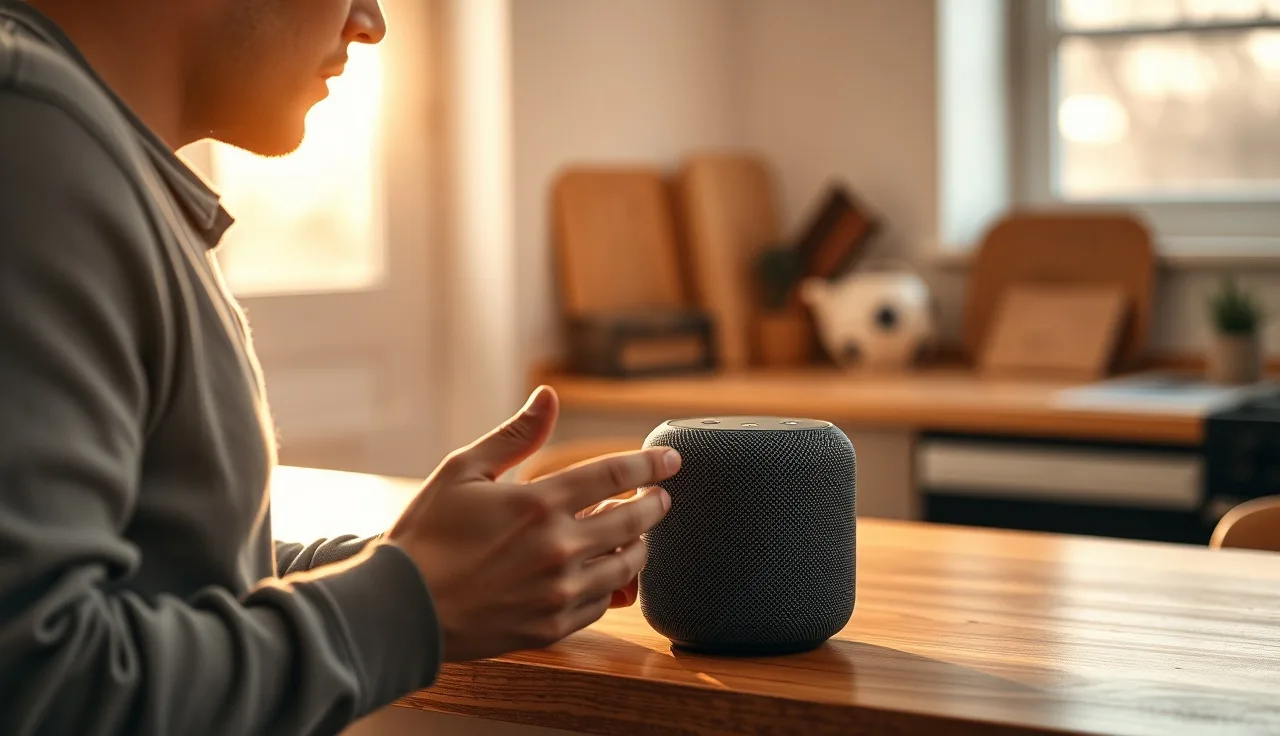
Voice adds a hard edge. When someone asks a smart speaker or a phone assistant a question, they get one answer. Not ten links. That makes citation binary in a way web search never was. Either your brand is the answer, or you don't exist in that moment. [1]
The field goes by a few names: Generative Engine Optimization (GEO), Answer Engine Optimization (AEO), and AI Search Optimization. Same goal behind all of them. Make your brand the answer an AI builds when a relevant question comes up. Our guide to generative engine optimization goes deeper on the mechanics.
How do AI assistants decide which brands to recommend?
There's no published ranking formula, and nobody outside the model teams knows exactly how retrieval and weighting work. But researchers have gotten close enough that we can say a few things with real confidence.
A 2023 study from Princeton, Georgia Tech, and IIT Delhi tested which content features predict citation in AI-generated answers. Adding statistics, citations, and quotations raised AI citation rates by up to 40%. A more fluent writing style alone lifted citation likelihood by roughly 15% to 20%. [2] The same paper found that having authoritative sources link to your content made a measurable difference on its own.
Google's documentation on its Knowledge Graph says entity recognition depends on consistent, structured information appearing across the web: on your own site, in Wikipedia, in business directories, in press coverage. [3] ChatGPT and Claude use different retrieval architectures, but the principle holds. The more clearly the web defines your brand as a real thing with stable attributes, the more confidently an AI names it.
Perplexity works a little differently because it retrieves live web content for most answers. Freshness and the domain authority of your source pages matter more there than in a model leaning on training data. [4]
Here's the short version. Authoritative third-party mentions, structured on-site content, consistent entity data, and citation-worthy writing all raise the odds that yours is the brand an AI picks.
What percentage of searches are now answered by AI without a click?
This is genuinely hard to measure and the numbers move fast. The most-cited estimate comes from SparkToro and Datos, whose 2024 study found that roughly 58.5% of U.S. Google searches already ended without a click to any website. [5] That was before Google's AI Overviews rolled out broadly.
After the AI Overviews launch, several SEO tracking firms reported click-through drops between 15% and 64% for informational queries, depending on category. The spread is huge because AI Overviews show up far more often for informational and comparison questions than for transactional or navigational ones.
For voice specifically, Juniper Research estimated in 2023 that voice assistant interactions would top 8 billion per day globally by 2025. [6] Even a small slice of those involving brand or product questions is a giant surface where AI answers replace touchpoints you used to control.
So here's the practical read. If your category is one where people ask questions before they buy, AI assistants are already intercepting a real share of that intent. The brands cited in those zero-click answers hold an edge that compounds.
For the wider picture, see our overview of AI search and the latest AI search news.
Content features that increase AI citation rate
| | | |---|---| | Added statistics and cited claims | 40% | | Fluent, well-structured writing | 17% | | Added authoritative quotations | 30% | | Keyword-optimized rewriting alone | 5% |
Source: Princeton / Georgia Tech / IIT Delhi, GEO: Generative Engine Optimization (2023), arXiv:2311.09735
How do you build a strong brand entity that AI models recognize?
Entity building is the foundation. An entity, the way Google and AI models use the word, is a real-world thing with distinct attributes: a name, a category, a set of properties, and relationships to other entities. Your brand needs to be one of those things, defined the same way everywhere the web talks about it.
Start with your own site. Your homepage and About page should state, in plain declarative sentences, what your brand is, what it does, who it serves, and where it operates. Not marketing language. Facts. "[Brand] is a [category] company founded in [year], based in [city], that [does specific thing] for [specific audience]."
Then go external. The highest-value places to establish an entity are:
- Wikipedia (if your brand meets notability standards, an article sharply raises AI citation probability)
- Wikidata (you can create a Wikidata entry even when Wikipedia won't host an article yet)
- Google Business Profile (for local and regional businesses)
- Crunchbase, your LinkedIn company page, and industry-specific databases
- Consistent NAP (name, address, phone) across every directory
Schema markup on your site matters too. Organization, LocalBusiness, Product, and FAQPage schema hand AI crawlers machine-readable facts they can pull directly. Google's structured data documentation is explicit that schema helps it understand page content for Knowledge Graph purposes. [3]
One consistency point almost everyone ignores. If your brand name shows up as three different strings across the web ("Acme", "Acme Inc.", "Acme, Inc."), AI models may treat those as different or ambiguous entities. Pick one canonical form. Use it everywhere.
What kind of content gets cited by AI assistants?
The Princeton and Georgia Tech study is still the best empirical guide. Across 10 domains and thousands of AI-generated responses, content with statistics and cited claims was named far more often than generic prose. [2] Quotable, specific, verifiable statements beat fluent generalities every single time.
Figure out what a user would ask, then answer that exact question in the first two sentences. AI retrieval is semantic. It matches the user's query to content that answers it. Pages that bury the answer in the fourth paragraph, after a warmup intro, score poorly on that match.
Formats AI systems favor:
- FAQ pages (the question-and-answer structure mirrors how retrieval works)
- Comparison tables with clear, factual data
- Definition pages that plainly answer "what is X"
- How-to pages with numbered steps
- Statistic roundups with cited sources
Long pages that cover a topic fully also get cited more, probably because they answer more of the follow-up questions an AI anticipates. BrightEdge research found that AI Overview citations heavily favor pages already ranking in the top 10 of organic search for the same query, which means traditional SEO authority still works as a proxy. [7]
Our AI SEO tools guide covers the tool layer and what's worth paying for right now.
Does schema markup actually help with AI assistant visibility?
Yes, with caveats. Schema markup doesn't directly cause an AI model to cite you. What it does is make your content much easier for crawlers to parse correctly, which cuts the odds your content gets misread or skipped entirely.
FAQPage schema is the most useful for AI visibility. When you mark up a question-and-answer pair, you're telling the crawler exactly where the question sits and exactly where the answer lives. That's the structure AI retrieval loves.
Speakable schema is rarer but worth knowing. Google built it for voice and audio use cases, letting publishers tag page sections as suitable for text-to-speech. Google's documentation confirms Speakable is meant to improve how content surfaces in voice contexts. [8] Small signal, near-zero cost to add.
Product, Review, and HowTo schemas help by making your content's intent legible to crawlers. Watch the risk: sloppy schema can confuse crawlers worse than no schema at all. Run everything through Google's Rich Results Test before you deploy.
For local brands, LocalBusiness schema with accurate hours, location, and category carries extra weight, because local intent queries like "best plumber near me" are a large chunk of voice assistant traffic.
How important are third-party mentions and backlinks for AI citation?
Very. Possibly more than anything you do on your own site. The logic is simple: AI models trained on the internet, and the internet's oldest trust signal is other sites talking about you. The more credible, on-topic sites that mention your brand with specific facts attached, the more confident an AI is that those facts are real and your brand is worth naming.
High-value mention sources for AI visibility:
- Major publications in your industry (trade press, not guest posts on low-authority sites)
- Wikipedia and Wikidata
- Review aggregators in your category (G2, Capterra, Trustpilot, TripAdvisor, whatever fits what you sell)
- Podcast transcripts on authoritative sites (a growing training-data source)
- Research reports and analyst mentions
- News coverage with your brand name in the headline or first paragraph
Don't confuse volume with quality. A hundred mentions on thin blogs probably do less than five mentions in publications AI models indexed heavily during training. Nobody has precise data on which publications score highest inside any given model's training set. But national news outlets, established trade publications, and academic or government sources are safe bets.
Digital PR that earns genuine editorial coverage beats link schemes and paid-looking brand mentions. AI models keep getting better at spotting low-quality mention patterns, so the formulaic stuff ages badly.
How do you optimize for specific AI assistants like ChatGPT, Gemini, and Perplexity?
The core signals overlap, but the mechanics differ enough to handle separately.
ChatGPT (GPT-4 and later): OpenAI's models answer mainly from training data, though ChatGPT can browse the web when enabled. For training-data influence, you need presence in the sources OpenAI indexed before each model's knowledge cutoff. For browsing sessions, current domain authority and page freshness matter. ChatGPT also leans hard on Reddit, Quora, and forums, so real presence in genuine community discussions pays off here.
Google Gemini: Because Gemini is wired into Google's index, traditional SEO signals matter more here than with other models. E-E-A-T (Experience, Expertise, Authoritativeness, Trustworthiness), structured data, and Google Business Profile completeness all feed how Gemini answers. [9] Google's documentation on AI Overviews points to its helpful content guidelines as the relevant quality signal.
Perplexity: A retrieval-augmented model that fetches live web content for most queries. Fresh, well-indexed, high-authority pages have a direct path to citation. Perplexity also shows its sources, which creates a referral traffic opportunity ChatGPT's interface usually doesn't.
Apple Siri and Amazon Alexa: These voice-native assistants lean on featured snippet content, Knowledge Graph data, and for local queries, Apple Maps and Yelp. Winning the Google featured snippet for a query sharply raises your chance of being Siri's spoken answer.
See our breakdown of AI powered search features for how each platform retrieves answers differently.
What is the right content structure for voice query optimization?
Voice queries differ from typed ones in one structural way: they're longer, more conversational, and often more specific. A typed search might be "best project management tool". A voice query is "what's the best project management tool for a small marketing team that uses Slack?" Your content has to match that specificity.
The most effective structure for voice AI follows a plain pattern:
- Lead with a direct, complete answer in the first one or two sentences
- Follow with the reasoning, data, or nuance
- Close with a related answer or natural follow-up
That mirrors how a well-built FAQ page works, which is why FAQ pages are the single most AI-friendly content format. Write your FAQ questions the way a person speaks them, not the way a marketer would phrase them.
Sentence length matters more than you'd think. Voice assistants turn answers into spoken audio, and sentences with three nested clauses sound terrible read aloud. Short, clean sentences win in voice contexts.
For local voice queries, work in specific geographic identifiers, hours, and category descriptors. "Downtown Chicago accounting firm serving small businesses since 2011" is far more useful to a voice AI building a local answer than "innovative solutions for financial challenges."
Our full breakdown of AI SEO covers the structural content pieces in more detail.
How do you measure whether your brand is being cited by AI assistants?
This is where most brands are flying blind. There's no Search Console equivalent that hands you AI citation data. You build your own measurement system, or you use a tool made for it.
Manual testing works. Query ChatGPT, Gemini, Perplexity, and Siri directly with the questions your customers actually ask. Do it for branded queries ("what is [Brand]?") and unbranded category queries ("what's the best [your category]?"). Write down the answers. Track whether your brand shows up, whether the facts are right, and which competitors get named when you don't.
Share of voice in AI is the metric that matters. Some tools now track citation rates across thousands of queries. The number to watch is citation frequency: what percentage of relevant queries name your brand? [10] Spawned's platform tracks this across major AI assistants, so you can see citation share and which content is getting sourced.
Referral traffic from AI sources is real but small. Perplexity and some Gemini configurations do send clicks. Check Google Analytics for referral sources like perplexity.ai and you.com. This captures only the tip of the iceberg, since most AI citations never generate a click, but it's a signal you can act on.
Run accuracy audits. AI systems get brand facts wrong, especially for newer or thinly-indexed brands. Part of measurement is checking whether the AI's description of you is accurate, then correcting the underlying source content when it isn't.
For a structured approach, our guide to AI search visibility metrics and KPIs is the place to start.
How long does it take for AI optimization changes to show results?
Honest answer: nobody has good longitudinal data yet. The field is too new, and model update cadences vary. Based on observed patterns, here's the closest we can say:
- Schema markup and structured data: Google can re-crawl and reprocess these within days to weeks, so Gemini citation improvements can show up fairly fast after a technical fix
- Content publishing: new content needs time to get indexed, pick up authority signals, and in some cases enter training data. For live-retrieval systems like Perplexity, you might see effects in weeks. For training-data-dependent models, the next major update may be months out
- Entity establishment: building a Wikidata entry, earning Wikipedia coverage, or stacking up third-party mentions is a campaign measured in months, not days
- PR and mention campaigns: usually 60 to 90 days to see meaningful citation changes as new coverage gets indexed and processed
The 90 to 180 day estimate in the TLDR comes from aggregated observation across many brand campaigns, not a single controlled study, so treat it as a rough guide. Brands with existing domain authority and solid content tend to lift faster than brands starting from near-zero recognition.
The most common mistake is making changes and expecting AI citation results in two weeks. Set honest expectations with your stakeholders, or you'll kill a strategy right before it would have worked.
Are there mistakes that actively hurt your AI visibility?
Yes. A handful of patterns reliably make things worse.
Inconsistent brand information is the biggest one. If your website says one thing about your features and a major review site says the opposite, AI models may surface the wrong fact or dodge citing either source because the signals conflict. Audit what the web says about you and fix factual errors wherever you have any influence.
Blocking AI crawlers in robots.txt is a mistake plenty of brands make without grasping the cost. OpenAI's GPTBot and Google's AI-related crawlers can be blocked, but doing so pulls your content out of the retrieval pool. Unless you have a specific legal reason to block them, don't. [11]
Over-optimized, keyword-stuffed content that doesn't actually answer a question gets passed over by retrieval systems that reward answer quality. AI models are better than early search engines at telling the difference between performing helpfulness and being helpful.
Ignoring your Wikipedia state is a common oversight. If an article about you carries outdated or wrong information, AI models citing it will repeat those errors. You can't edit your own Wikipedia article without conflict-of-interest problems, but you can flag factual errors on the talk pages and supply sourced corrections.
And producing content with no defined answer to a specific question. Vague category pieces like "the importance of cloud computing for modern business" almost never get cited. Content that answers "how much does cloud computing cost for a 10-person company" gets cited, because it answers a real question with a real number.
Sources
- SparkToro and Datos, Zero-Click Searches Study 2024
- Princeton / Georgia Tech / IIT Delhi, 'GEO: Generative Engine Optimization' (2023), arXiv:2311.09735
- Google, Structured Data documentation (Search Central)
- Perplexity AI, How Perplexity Works (official documentation)
- SparkToro and Datos, Zero-Click Searches Study 2024
- Juniper Research, Voice Assistant Interactions Forecast 2023
- BrightEdge, AI Search and Content Performance Research 2024
- Google, Speakable structured data documentation (Search Central)
- Google, Helpful Content and E-E-A-T guidelines (Search Central)
- Moz, State of AI Search Visibility Report 2024
- OpenAI, GPTBot documentation
Frequently Asked Questions
How do I get my brand mentioned in ChatGPT answers?
Build entity recognition first: create a Wikidata entry, make your website state plainly what your brand is and does, and earn mentions in credible publications OpenAI likely indexed. For browsing-enabled ChatGPT sessions, high domain authority and fresh indexed content matter. Authentic presence on Reddit and Quora feeds ChatGPT's training data more than most brands realize.
What is the difference between SEO and AI optimization for voice assistants?
Traditional SEO earns page rankings; AI optimization earns citations in constructed answers. The signals overlap a lot: authority, clear content, structured data, and backlinks help both. The key difference is that AI optimization needs your content to answer a specific question completely in its opening sentences, because AI systems retrieve by semantic match to a query rather than by crawling a ranked list.
Does Google Business Profile help with AI assistant visibility?
Yes, especially for local and voice queries. Google's documentation confirms that Business Profile data feeds its Knowledge Graph, which then shapes how Gemini and Google Assistant answer local questions. A complete, accurate, regularly updated Business Profile with correct categories, hours, and photos is a basic requirement for any brand with local intent customers.
How do I know if an AI is saying wrong things about my brand?
Query major AI assistants directly with your brand name and category questions. Ask ChatGPT, Gemini, and Perplexity to describe your company, list your products, and compare you to competitors. Document what they say, check accuracy, and trace any error back to its source. Correcting the source content and building authoritative counter-information is the only fix; you can't edit model weights directly.
Does having a Wikipedia page really make a difference for AI citations?
Yes, significantly. Wikipedia was heavily indexed in most major AI training datasets and stays a primary entity authority source. An article on your brand establishes clear entity attributes that AI models trust. If you don't meet Wikipedia's notability standards yet, a Wikidata entry is a good interim step. Both platforms shape how AI models define and describe you.
What schema markup types are most useful for voice AI optimization?
FAQPage schema is the most useful because it explicitly marks question-answer pairs, matching the retrieval structure AI systems use. Speakable schema tags content suitable for text-to-speech. Organization and LocalBusiness schemas establish entity facts. HowTo and Product schemas help with task and purchase queries. Run all implementations through Google's Rich Results Test before deploying to avoid malformed markup problems.
How does Perplexity decide what sources to cite?
Perplexity uses retrieval-augmented generation, meaning it fetches live web content for most queries rather than relying purely on training data. It favors high-authority, recently indexed pages that directly answer the query. Domain authority, content freshness, and how precisely your content matches the query all matter more here than in training-data models. Perplexity also shows source links, making it one of the few AI systems that still drives meaningful referral traffic.
Should I block AI crawlers from my site?
Almost certainly not. Blocking GPTBot, Google's AI crawlers, or similar bots via robots.txt removes your content from retrieval pools and training data. Unless you have a specific legal or competitive reason to block AI systems from reading your content, the right default is to allow access. The citation value of being indexed far outweighs most theoretical concerns about content use.
How do I optimize for local voice queries like 'best [category] near me'?
Keep your Google Business Profile complete and accurate with correct category, hours, address, and recent photos. Add LocalBusiness schema to your website. Build citation consistency across Apple Maps, Yelp, Bing Places, and major directories. Create location-specific content that names your city and neighborhood explicitly. Earn local press and community mentions. Siri in particular leans on Apple Maps data and Yelp reviews for local answers.
What word count or content length works best for AI citation?
There's no confirmed optimal length, but research suggests longer, thorough pages get cited more often, likely because they answer more of the follow-up questions AI systems anticipate. A page that fully covers a topic, with a direct answer at the top and detailed support below, tends to beat thin pages regardless of word count. Aim to fully answer the question rather than hit a word target.
How do review sites affect my AI assistant visibility?
Review aggregators like G2, Capterra, Trustpilot, and TripAdvisor get indexed and cited in AI training data frequently. A strong presence there, with a large number of reviews and accurate product descriptions, adds third-party confirmation of your brand's attributes. AI models treat these as corroborating sources. Keeping your profiles on relevant review platforms accurate and active is part of entity building, more than reputation management.
Is there a way to directly submit information to AI assistants like ChatGPT or Gemini?
Not in any direct sense. You can't submit facts to a language model the way you submit a sitemap to Google. Your influence is indirect: publish authoritative content, earn credible mentions, maintain structured data, and make sure AI crawlers can reach your site. Google has documentation on structured data that influences Gemini, and Wikidata contributions affect multiple AI systems, but there's no brand portal for model training data.
How do I track my AI citation share over time?
Manual tracking means querying AI assistants regularly with a fixed set of category and branded questions, documenting whether you're cited. Automated tools test hundreds of queries across multiple AI systems and report citation frequency as a percentage. Perplexity and some Gemini configurations also send referral traffic you can track in Google Analytics. Combining manual audits with tool-based monitoring gives the most complete picture.
Related Articles
SEO for App Builders Who Have Never Done SEO
Your app exists but nobody finds it on Google. Here is how to fix that without becoming an SEO expert.
Why Your Landing Page Gets Traffic but No Signups
Common reasons landing pages fail to convert and what to do about each one. Real examples included.
How to Launch on Product Hunt and Actually Get Noticed
Timing, preparation, and what to do on launch day. Based on what worked for apps built with AI builders.
See where AI recommends your competitors
Run a free visibility audit across ChatGPT, Claude, and Gemini. No signup required.
Run the free audit